
‘I feel left behind’: graduates struggle to secure good jobs
For Felix, seeking to uncover a job is a “complete grind”. The London-based mostly graduate, who prefers to give only his to start with title, suggests he is neglecting college do the job in get to produce go over letters and complete assessments. The “lack of feed-back from the (quite a few) rejections potential customers to a fairly vicious cycle. Normally firms merely blank you in its place of a rejection electronic mail.”
Immediately after he discovered standard routes proved tense and unsuccessful, he focused on cold-emailing and at some point received an give. “[It] appears a match of luck and quantities,” he suggests. “The graduate job marketplace is totally flooded, as is that of postgrad apps.”
Like other 2021 graduates, Felix is entering a global positions marketplace the place there are fewer alternatives and amplified competition. He was one of far more than 70 who offered comprehensive responses to a Monetary Instances survey about graduating in the pandemic.
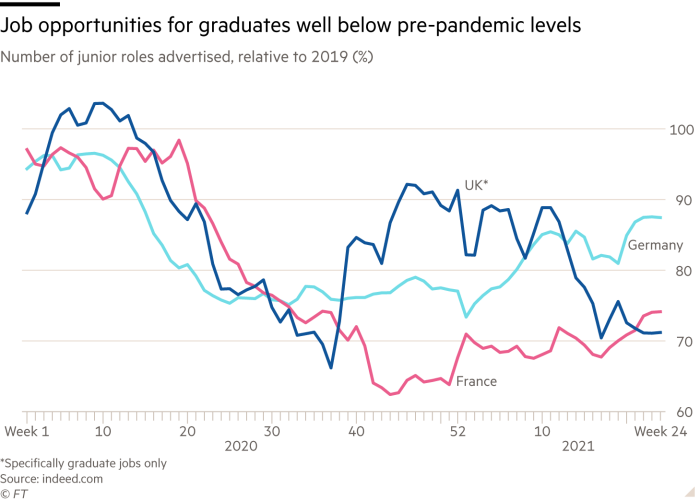
Quite a few respondents, together with all those who have graduated from major institutions such as the London University of Economics, the College of Cambridge and College Faculty Dublin, explained their struggles in securing entry-degree positions. They also highlighted that they are competing with 2020 graduates who lost out when graduate programmes were suspended.
A broad greater part of respondents felt there were fewer job alternatives obtainable for graduates. Quite a few of their personalized experiences highlighted a hyper-aggressive positions marketplace, which can be demoralising and demotivating.
Quite a few also felt they experienced not discovered a job that fulfilled their profession aspirations, and experienced to choose a place with a lessen income than predicted. About 50 % felt that the pandemic has established back again their early profession prospective clients.
On the other hand, although far more than a third felt they experienced been forced to adjust the course of their profession as a final result of the pandemic, they believed the result was not essentially a negative one.
Competitive positions marketplace
A graduate from the LSE, who most popular not to be named, mentioned that finding a job was “a struggle”. “Despite staying highly certified, you are competing against individuals that graduated a couple several years back but however utilize to [do] the similar positions as you mainly because they could not uncover better. And you simply cannot actually compete mainly because they have experience which you really don’t have as a younger graduate.”
In the Uk, of all those that graduated throughout the pandemic 29 for every cent of ultimate year pupils lost their positions, 26 for every cent lost their internships and 28 for every cent experienced their graduate job give deferred or rescinded, in accordance to exploration from Prospective buyers, a expert graduate careers organisation.
In the meantime, all those who operate considerable graduate strategies have claimed considerable boosts in the number of candidates for this year’s intake.
Hywel Ball, Uk chair of EY, the experienced providers company, suggests graduate apps were up by sixty for every cent in comparison with 2019, and twelve for every cent in comparison with 2020. Allen & Overy, the international legislation company, suggests apps for its Uk graduate plan grew by 38 for every cent this year, with year on year growth for the past three application cycles.
Unilever, the client products business, recruits graduates across 53 countries and saw a 27 for every cent improve in apps from 2019 to 2020.
Compounding the difficulty even more is the increasing number of entry-degree positions that involve do the job experience. Even right before the pandemic, sixty one for every cent of entry degree positions in the US demanded three or far more several years of do the job experience, in accordance to a 2018 examination by TalentWorks, a job-matching program business.
Some pupils sense the application process for some firms is becoming ever more arduous. James Bevington, who has not long ago finished a PhD in chemical engineering at the College of New South Wales in Sydney, Australia, suggests: “When the electric power dynamics are so skewed against you with hundreds of apps for every purpose, the recruitment process can develop into abusive.”
He describes how on publishing an application he was supplied two days to undertake a 24-hour evaluation for which he experienced to fall anything. He experienced no chance to question essential issues about the business and only received an automatic rejection after getting a excellent rating on the evaluation. “Why trouble?” he suggests.
A London-based mostly engineering graduate, who most popular not to be named, suggests: “Up right up until now I have 230+ unsuccessful apps for entry-degree positions. Having graduated [in] personal computer science, I now include earnings to my family members as a delivery driver in involving implementing for distinct positions and seeking to muster the enthusiasm to preserve heading. I sense left guiding, not only by the job marketplace, but by the institutions that provided my instruction — my academic achievements are a little something I delight myself on, yet the job marketplace appears to be to disregard them entirely.”
Stability as opposed to curiosity
Another recurrent topic was that some who have secured employment are in reality curious about checking out other alternatives, but the uncertainty suggests they are unwilling to go away their current employer and check out a distinct purpose at another business. Finding secure do the job was far more important than finding fulfilling do the job.
Another London-based mostly graduate, who most popular not to be named, experienced secured a job in an investment lender but experienced speedily decided it was not for them and would like to swap profession. But “it’s challenging finding distinct opportunities . . . And it’s easier to stick to the safer, perfectly-compensated path than choose a possibility and stop up redundant,” they mentioned.
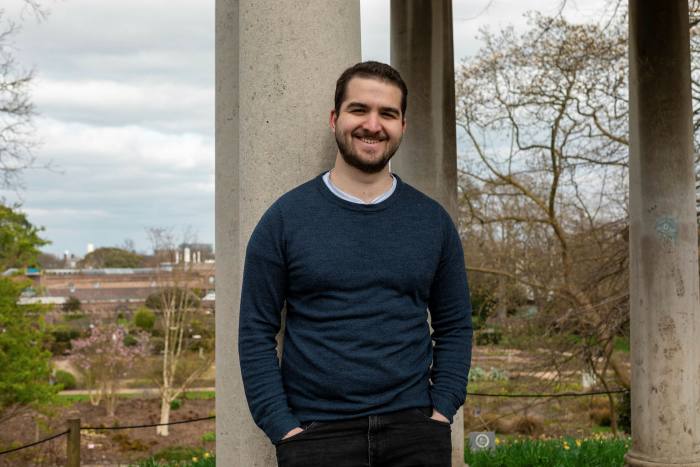
A legislation graduate from College Faculty Dublin, at present based mostly in Leuven, Belgium, following a masters at KU Leuven, who did not want to give his title, suggests: “The pandemic has impacted all of our nervousness degrees but its disproportionate consequences on employees has actually created job stability a priority for me, earlier mentioned finding do the job that is fulfilling and fulfilling.”
Elliot Eager, a graduate in civil engineering from Birmingham college who is now based mostly in London, mentioned that new entrants to the labour marketplace could default back again to a “job for life” relatively than shifting about: “I reckon individuals will remain in their roles for five, it’s possible ten several years or more time.”
Unforeseen success
Among the all those graduates who felt forced to choose another course, some outcomes have been positive.
Alex Morgan, who did a political economic climate MA at King’s Faculty London following his undergraduate diploma at Leeds, suggests the pandemic has “perversely helped me”. He decided to pursue postgraduate instruction “because the graduate positions marketplace felt so dysfunctional” last year. Following his MA, he secured a job with the civil company. He experienced not planned to do an MA and provides: “I really don’t feel I would have been in a position to secure this kind of job devoid of it.”
It appears to be quite a few other pupils have also opted for postgraduate alternatives. An examination of the FT’s company university rankings, for case in point, shows how apps to postgraduate programmes, such as an MBA or masters in finance, have amplified.

He also thinks that the forced shift in performing patterns could degree the taking part in discipline and enable more quickly progression — specifically for all those not based mostly in London.
Nathaniel Fried, a geography graduate from King’s Faculty London, was performing element-time on location up an information stability business. Anticipating the lack of job alternatives, he decided to pursue it comprehensive time. “We have been undertaking perfectly,” he suggests. Although he feels he was forced by situation, checking out alternatives exterior the traditional job marketplace “has boosted my early profession prospective clients by forcing me to innovate”, he suggests.
Similarly, PhD scholar Bevington — who drew on the classes of finishing his undergraduate system throughout a economic downturn in 2011 — also decided to get started his own business, a non-gain in the place of space exploration. “When I approach would-be companies about my company’s featuring, they cannot associate brief adequate.”
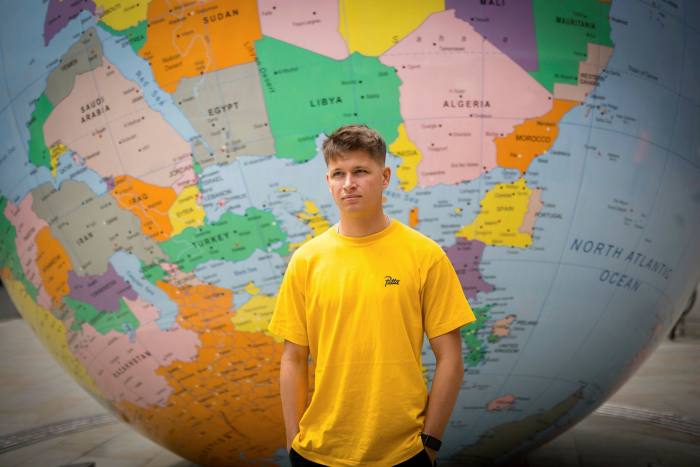
Brian Massaro, an applied economics masters graduate from Marquette College in Milwaukee in the US, has accepted a comprehensive-time place following an internship throughout his studies, but he and a friend have been implementing to get started-up incubators and accelerators to grow an on line publishing business he has been performing on for the past couple several years.
Although pupils felt the pandemic has experienced a knock-on impact on their speedy profession prospective clients, quite a few respondents’ sentiment was cautiously optimistic for the extensive time period. But some felt that governments and firms really should be offering far more support and investing in graduates.
Morgan provides that firms could have to have even more incentives to supply substantial-good quality graduate roles. “We greatly stimulate younger individuals to go to great universities, using on a good deal of personal debt to do so,” he suggests. “It appears to be, in my peer group, that there is a raft of graduates (from major universities) who are not able to uncover roles which challenge them. That is not to say they are entitled to one, but I feel there is a clear gap involving the promise of college and the actuality on the other side.”
Fried provides: “I believe both firms and authorities really should be using steps to invest in graduates. Social mobility is very reduced and all those impacted most by lack of alternatives are marginalised teams.”
Rahul, an India-based mostly MBA graduate who did not want to give his last title, suggests firms have to have to make improvements to the recruitment process and shell out graduates based mostly on skills: “Do not cut down shell out just mainly because individuals are in have to have.” He also suggests that time taken to seek the services of wants to be reduced to thirty days. “[Some] are using practically 100 days for one recruitment process. It is inefficient.”
Irrespective of the issues, some respondents are upbeat. “It is tricky for us graduates,” provides a Brighton college graduate. “We’ll be all the more powerful for it however!”
Graphics by Chelsea Bruce-Lockhart


