
FT business books: July edition
‘Backstage Leadership: The Invisible Do the job of Really Successful Leaders’, by Charles Galunic
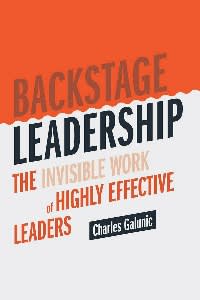
The late organisational theorist James March, who transpired to teach Charles Galunic at Stanford, made use of to say that management was a delicate mix of “poetry and plumbing”.
Galunic’s ebook does not neglect the poetry. He writes well about the obligation of leaders to established powerful visions for their teams and market them whilst in the glare of the general public highlight. But his emphasis is on the prosaic plumbing and electrics. The “creating, retaining and integrating” of fundamental processes these types of as creating expertise, crafting lifestyle, handling contradictions — “are the essential, albeit backstage, often invisible, operate of organization leaders”.
This is not a ebook about how to deal with the specific troubles of taking care of out of a pandemic or via a recession — it was prepared in advance of lockdown. There is, nevertheless, a lot here to enable hard-pressed leaders in a disaster, richly illustrated with examples from organization, activity and culture.
For instance, Galunic suggests “scanning and sensemaking” — the system of capturing signals and interpreting them — are vital strategies to uncertainty. He also revisits one more Marchian strategy about taking care of the contradiction between “exploration” (together with innovation and creation) and “exploitation” (the countless lookup for further efficiency in existing regions of organization). The aim? An “ambidextrous” management design that balances “conflicting and often paradoxical forces”.
‘Winning Now, Winning Later on: How Companies Can Win in the Brief Time period Though Investing in the Extended Term’, by David Cote
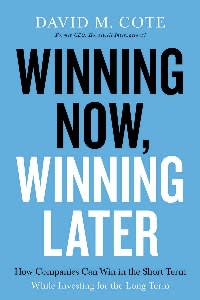
When David Cote became chief govt of Honeywell of the US in 2002, he took above from Larry Bossidy, a rough-nut boss, who experienced prepared a organization bestseller identified as Execution: The Self-control of Having Points Completed. It is a shock, then, to uncover from his great and in depth account of how to operate an industrial organization that the firm Cote inherited “needed to execute better”. Guiding the “facade” was “a coach wreck . . . on the verge of failure”.
As for finding items completed, “just get it done” was what the finance division told the organization divisions when they were struggling to make demanding quarterly targets. It led to “untrammelled short-termism and a compromised strategic setting up process”.
One lesson may possibly be not to browse guides prepared by ostensibly thriving chief executives, but Cote’s could be the exception that proves that rule.
It is made up of its share of self-congratulation and instead also numerous nods to former colleagues. On the other hand, Honeywell experienced amplified in value from $20bn to $120bn by the time Cote remaining in 2018, so he has attained the correct to boast a minor. Winning Now, Winning Later on is also rescued by just adequate emphasis on mistakes made and classes learnt, and a substantial dose of extremely useful suggestions on management, together with how to experience out a recession.
Higher than all, Cote underlines how to attempt to meet the central organization obstacle of investing for the potential and yet attaining short-term benefits, “accomplishing two seemingly conflicting items at the exact same time”.
‘Future-Evidence Your Business’, by Tom Cheesewright
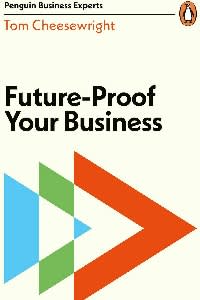
Even in advance of the global pandemic, businesses were working in a world of continual improve and disruption. Tom Cheesewright writes that these disrupting tendencies can past above several years, whilst there are other a lot quicker waves of improve layered above these, enabled by globalisation and technology.
Below the utilized futurist draws on his expertise of assisting organisations to react to innovation to give a survival manual for taking care of a thriving organization in an ever more intricate landscape.
Aimed at businesses leaders, or people who aspire to direct, Cheesewright says it is essential to “reshape your organization for an age the place adaptability to tomorrow’s obstacle is a improved predictor of accomplishment than getting correctly optimised to today’s conditions”.
It is neatly break up into three areas. Initially, he addresses how to structure a potential-proof organization, a system that starts with a improve in mentality. The writer thinks that recent short-termism focuses on “immediate success” not “sustainable success”, so it is essential to reset the anticipations of what management appears to be like so the concentration is on “adaptation”, instead than “optimisation”.
The next part guides leaders on “how to see the future”. Below Cheesewright supplies some basic techniques for evaluating the near and distant potential, which will enable leaders outline additional plainly a way for their organization and enable identify likely obstructions.
The third portion appears to be at how businesses can be very best organized for a “rapid response”. This focuses on choice building: how to make the correct conclusions additional promptly but also knowing that the very best conclusions are not constantly the speediest. “Sometimes, slower, info-centered, strategic conclusions are expected. Recognizing when to tell the difference is essential,” he writes.
Successful choice building is also about empowering people today and devolving some choice-building ability to people further down the line.
The ebook is really complete, to the point — and only one hundred fifty internet pages. And whilst the writer argues he can not guarantee that your organization will be the one to endure and prosper he can “help you to strengthen the odds dramatically”.
‘The Art of Becoming Indispensable at Do the job: Win Influence, Beat Overcommitment and Get the Appropriate Points Done’, by Bruce Tulgan
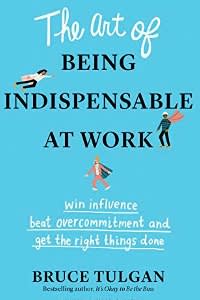
This ebook is aimed at assisting us all turn out to be one of people “go-to people” that every firm has — people whose knowledge, efficiency and straightforward way with colleagues is underpinned by company skills in their place of operate.
It will, due to the fact of its title, specially enchantment to people who already recognise on their own as “people pleasers” and whose MO at operate is to attain traction via co-procedure and appeal. But Tulgan’s straightforward to digest suggestions (by itself charmingly offered) is beneficial to every person: “Navigating collaborative associations [at operate] is not going away. And accomplishing that job really, really well is how legitimate go-to people today, in the authentic world, earn authentic impact, beat above dedication and get the correct items completed.”
Tulgan, who is an adviser to organization leaders, is excellent on suggestions for steering clear of saying indeed when you will need to say no — steering clear of above dedication, in other text, which is a enormous likely dilemma for the organisation’s go-to particular person. For the reason that in a collaborative world, the essential to impact is to operate across teams, in tune with your boss but not confined to vertical choice building. Performing horizontally or diagonally across other teams and initiatives involves technical skills — and also people today management.
And the essential to that? Not expecting everything back. There’s no quid professional quo for go-to people today. “The legitimate go-to particular person does not continue to keep a tally sheet -authentic or imagined — of equal favours to be traded for inducing colleagues to choose specific conclusions or steps. If you imagine in authentic impact, you provide many others due to the fact that’s what is correct and that’s what makes the most value for every person, in the short term and the prolonged term.”
In restricted publish-disaster workplaces, getting another person dependable and experienced is going to turn out to be evermore critical. Tulgan’s ebook is well timed, pertinent and pleasing.
‘Designing your Do the job Existence: How to Prosper and Improve and Find Joy at Work’, by Bill Burnett and Dave Evans
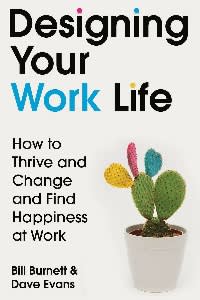
We are all finding made use of to a new operate-everyday living stability in an period of coronavirus lockdown. For numerous of us working from dwelling, suggestions on how to uncover that means and joy is welcome when the daily commute is a stroll downstairs and the movie Groundhog Working day feels additional like a documentary.
Bill Burnett and Dave Evans concentration on the uncertainties of the fashionable age and the will need to changeover between roles, which was an difficulty in advance of the coronavirus disaster. Nevertheless, the financial upheaval made by the pandemic will no doubt make this ebook an eye-catching proposition for numerous people today now thinking about a radical improve in lifestyle or just questioning what operate is all about.
The major struggle this ebook could possibly have is getting picked from between the numerous titles already prepared about operate-everyday living stability. But the authors attempt to enable their visitors in a really personable and useful way: Evans and Burnett present it as a abide by up to their prior ebook, Coming up with Your Existence, about getting intent in your operate. “This ebook is about building it authentic,” they publish.
One of these essential useful classes is to be content with what you have now, not what you would like to have tomorrow. If that is not a useful lesson for everyday living in coronavirus lockdown, what is?
‘You’re About to Make a Horrible Error: How Biases Distort Choice-Producing — and What You Can Do to Battle Them’, by Olivier Sibony
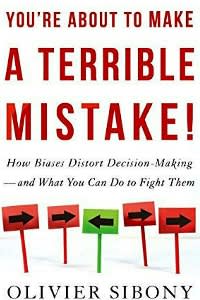
We have all made lousy conclusions, but does that make us a lousy leader? Not in accordance to Olivier Sibony, a professor and specialist in organization strategy, whose ebook works by using behavioural science to clarify why all people today, even fantastic leaders, are probable to do the improper issue, often due to the fact of cognitive biases.
This is a ebook crammed with some fascinating, and horrifying, stories of choice-building failures. It will make dry scientific ideas in management concept, these types of as affirmation bias and heuristics, additional available. Some of these tales are well regarded, these types of as video rental firm Blockbuster’s failure to acquire Netflix, but they are however useful in this context.
The ebook is aimed at company leaders with adequate self-recognition to realise that they make lousy conclusions in part due to the fact of their personal biases, but it supplies reassurance and suggestions to all of us with options to make. It is also an straightforward browse with actionable suggestions.
It may possibly not be excellent for people looking at this ebook to attain convenience from their failure, presented the significant price tag of lousy choice building by firm heads. Nevertheless, perception into why we could possibly have made improper conclusions in the past is certainly worthwhile.
Probably the most comforting information of this ebook is that accomplishment is under no circumstances down to individuals — the mistaken belief that propped up the cult of Steve Work at Iphone maker Apple. The flip side of this is that you are not a lousy leader just due to the fact you make lousy conclusions. And excellent choice makers do not act by yourself: they are the architects of excellent choice processes, adopted by a workforce.


